Robozonex
Loading page content...
Loading page content...
Discover in-depth robotics tutorials, hardware build logs, system architecture updates, and industry insights from our team.
The Hidden Bottleneck in STEM Education: Breadboard Fatigue Ask any robotics instructor what consumes 80% of lab time, and the answer is rarely code—it is loose jumper wires, faulty breadboard spring clips, and parasitic voltage drops. When students work on IoT and Edge AI projects involving Wi-Fi bursts (ESP32 peaks up to 500mA) and servo motor inductive kickback, breadboards introduce high ground bounce and unpredictable brownout resets. At RoboZoneX Labs, we solve this by designing and manufacturing custom Smart Embedded Training Boards in-house. In this article, we share our design methodology from schematic capture to Gerber manufacturing. --- 1. Power Architecture & Voltage Isolation Robotics boards deal with two distinct power domains: 1. Noisy Inductive Rail (5V-9V / 2A-5A): High-current servos, DC motors, solenoid valves. 2. Clean Digital Logic Rail (3.3V / 1A): Microcontrollers (ESP32 / STM32), precision sensors (IMUs, environmental sensors). mermaid flowchart TD A"DC Barrel Jack (7.4V - 12V)" --> B"Schottky Diode (Reverse Polarity Protection)" B --> C"Buck Regulator (5V 3A)" B --> D"LDO Regulator (3.3V 1A Clean)" C --> E"Servos & Motors" D --...
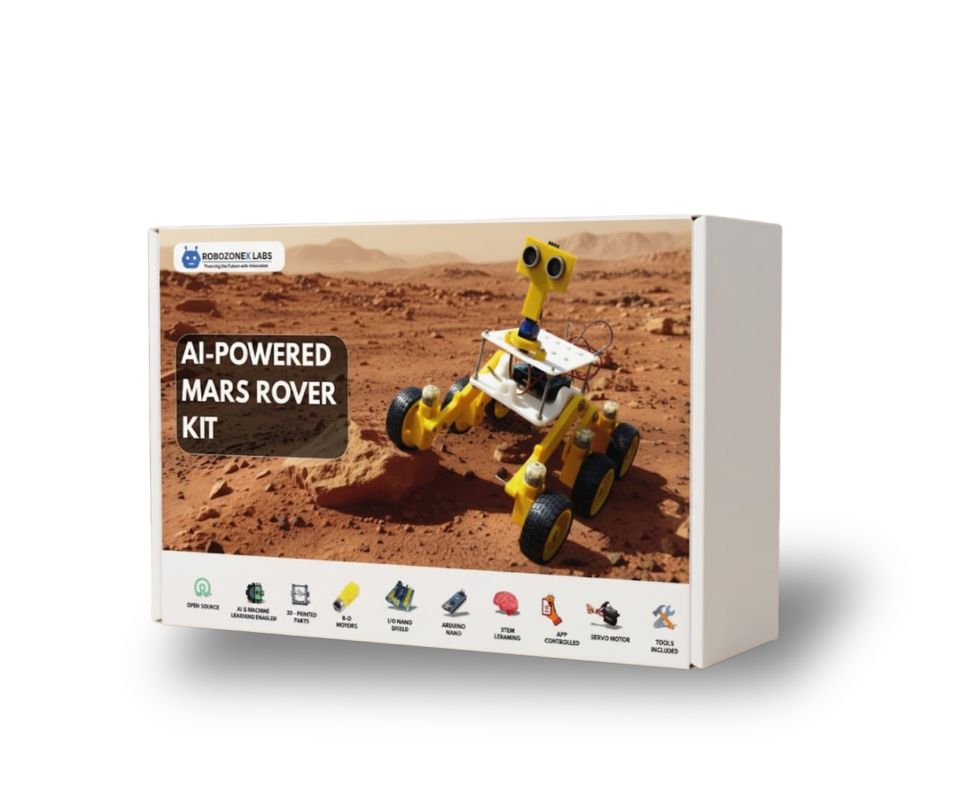
An in-depth mechanical and electronic breakdown of NASA-inspired Rocker-Bogie linkages, multi-wheel DC motor torque distribution, and integrating ESP32 telemetry for autonomous rough-terrain planetary rovers.